

Puanga–Matariki Insights Series Concludes with Whānau Voice Report on Stroke and Gout
Kua mutu te Raupapa Rangahau o Puanga me Matariki, kua tāia te Pūrongo Reo Whānau mō te Mate Ikura Roro me te Mate Porohau
Kua mahi tahi te Poari Hauora o Āti Awa Toa ki a Stroke Aotearoa me Mateponapona Aotearoa kia mārama ake ki te pānga o te mate ikura roro me te mate porohau ki ngā whānau, ki ngā momo ratonga, tautoko hoki hei āwhina i a rātau. Nō muri mai i te rangahau tuihono e 6 wiki te roa i te tīmatanga o te tau, i kohikohi mātau i ngā wheako a ngā whānau Māori i te Te Whanga-nui-a-Tara (Pōneke/Porirua/Kapiti/Te Awakairangi).
Nā ngā mahi nei kua tāia tētahi pūrongo ko WHĀNAU VOICE: Whānau Māori experiences of stroke and gout across the Wellington rohe1. Ka whakaterehia tēnei pūrongo i te rā nei, koia ko te pūrongo tuatoru i te Raupapa Rangahau a te Poari Hauora o Āti Awa Toa o Puanga me Matariki mō 2026. Ka titiro te pūrongo nei ki ngā wheako a ngā whānau e ora ana me te mate ikura roro, te mate porohau puta noa i Te Whanga-nui-a-Tara, ka tohu hoki i ngā huarahi hei whakapaipai i ngā mahi aukati, maimoa, ngā hua mauroa, me te aro ki ngā ōritengakore e rongo ana a Ngāi Māori.
Hei tā te Manahautū o te Poari Hauora o Āti Awa Toa, hei tā Hikitia Ropata “Kitea ana i tēnei kaupapa te kaha o te mahi rangapū ki waenga i te Poari Hauora o Āti Awa Toa, i a Stroke Aotearoa me Mateponapona Aotearoa, e mahi tahi ana ki te hāpai i te reo o te whānau. Ko te pūrongo whakamutunga tēnei i tā mātau Raupapa Rangahau o Puanga me Matariki, ka whakamahara i a tātau ko te whakarongo ki te whānau te hātepe tuatahi noa iho nei. Kei te whai haepapa mātau ināianei ki te whakarite ka tārai ngā reo nei i ngā mahi whakamāherehere, tuku pūtea hoki me ngā ratonga hei tautoko i ngā anamata waiora mā ngā whānau puta noa i te rohe.”
E kī ana te kaihautu o Stroke Aotearoa, ko Jo Lambert “Ko te mahinga tahi nei ki waenga i a Stroke Aotearoa, te Poari Hauora o Āti Awa Toa me Mateponapona Aotearoa kua whakamiramira i ngā āputa ā-pūnaha e whai pānga ana ki ngā hua hauora a ngā tāngata i muri i te mate ikura roro, i te mate porohau me ō rātau whānau anō hoki. Ka whakamiramira ngā kitenga nei i ngā wāhi ka taea e te pūnaha te whakapaipai āna mahi, me pēnei ka tika, heoi mā te mahi tahi ka taea te tautoko ngā huarahi me ngā hua whai oritetanga hei whakahaere i ēnei mate mau-roa.”
Hei tā te kaihautu o Mateponapona Aotearoa, hei tā Philip Kearney “Ka whakatauira mai tēnei i ngā mahi ka taea ki waenga i ngā iwi, ngā whakahaere hapori me ngā hoa rangapū hauora ina ka mahi i runga i te whakaaro kotahi ki te hāpai i te ōritetanga me te hauora whānau. Mā te āta mahi rangapū, mā te whakatairanga i ngā reo o ngā whānau, ka mārama ake tātau ki ngā taiapa kei mua i te tangata, ka taea te mahi tahi ki te tautoko i ngā hua hauora, waiora hoki mō ngā whakatipuranga e heke mai ana.”
Puanga–Matariki Insights Series Concludes with Whānau Voice Report on Stroke and Gout
Āti Awa Toa Hauora Partnership Board has partnered with Stroke Aotearoa and Arthritis NZ Mateponapona Aotearoa to better understand how stroke and gout affect whānau and what services and support would help. Following an online survey that ran for 6 weeks at the beginning of the year, we gathered experience from whanau Māori in the Wellington rohe (Pōneke/ Porirua/ Kāpiti/ Te Awakairangi).
This mahi has resulted in a report called WHĀNAU VOICE: Whānau Māori experiences of stroke and gout across the Wellington rohe. This report is being launched today and is the 3rd report in Āti Awa Toa Hauora Partnership Board’s Puanga-Matariki Insights Series 2026. The report examines the experiences of whānau living with stroke and gout throughout the Wellington region, identifying opportunities to improve prevention, treatment and long-term outcomes while addressing persistent inequities experienced by Māori.
Āti Awa Toa Hauora Partnership Board Manahautū, Hikitia Ropata says “This kaupapa demonstrates the strength of partnership between Āti Awa Toa Hauora Partnership Board, Stroke Aotearoa and Arthritis NZ Mateponapona, working together to elevate whānau voice. As the final report in our Puanga–Matariki Insights Series, it reminds us that listening to whānau is only the first step. Our responsibility now is to ensure those voices shape planning, investment and the services that support healthier futures for whānau across our rohe.”
Stroke Aotearoa CE/kaihautu Jo Lambert says “This collaboration between Stroke Aotearoa, Āti Awa Toa Hauora Partnership Board and Arthritis New Zealand has shone a spotlight on systemic gaps which impact health outcomes for people managing their life after stroke and / or with arthritis, as well as their whānau. These insights highlight where the system could and should be doing better, and by working collectively our organisations can support equitable pathways and outcomes for the management of these long-term conditions.”
Arthritis NZ Mateponapona Aotearoa CE/kaihautu Philip Kearney says “This kaupapa demonstrates what is possible between iwi, community organisations and health partners when we come together with a shared commitment to equity and whānau wellbeing. Through authentic partnership and by elevating the voices of whānau, we can better understand the barriers people face and work collectively to support health and wellbeing outcomes for future generations.”
Te Māra o Hine-Raraunga
Purpose
Te Māra o Hine‑Raraunga (the report) was commissioned in partnership between Āti Awa Toa Iwi Māori Partnership Board and Manatū Hauora to identify culturally appropriate whānau voice data storage and protection solutions that also enable appropriate sharing and utilisation of whānau voice data. This work recognises that for whānau voice to be used effectively to set local and regional health priorities for Māori, trusted processes that uphold the mana of those voices are required.
The report provides:
- an assessment of the limitations in current approaches to whānau voice collection, storage and protection
- a proposed framework (Te Māra o Hine‑Raraunga) describing the key components of a strong whānau voice system
- a staged pathway for how IMPBs can move toward a sovereign, fit-for-purpose system.
Key challenges to the current approach
Current systems are not fit-for-purpose
Whānau voice includes narrative, lived experience and whakapapa-linked kōrero, but is typically collected and stored using tools designed for administrative or transactional data. This creates a fundamental mismatch between the nature of the information and the systems used to manage it, meaning it is not handled in ways that reflect its significance or sensitivity.
Whānau voice data approaches are fragmented and poorly governed
Data is often held across multiple locations, formats and tools, with inconsistent approaches to who can access the data, how it can be used, and what protections apply. Good governance therefore is not embedded in system design.
Data sovereignty cannot be enacted in the current system
The reliance on international corporate platforms means whānau voice data may remain subject to external control and legal jurisdiction. The report suggests that this infrastructure is incompatible with the principles of Māori data sovereignty and does not support rangatiratanga.
Trust in how whānau voice is managed is not assured
Where storage, governance and use are unclear, confidence in the system can be undermined. The report stresses that trust is a necessary precondition to the collection and use of whānau voice. Without confidence in how their kōrero will be handled, whānau may be less likely to share it.
There is no structured pathway toward tino rangatiratanga
Finally, the report emphasises that there is no clear pathway toward a data system that is fundamentally built on Māori data sovereignty principles. As a result, improvements tend to be incremental and ad hoc and do not address the underlying misalignment between existing systems and Māori data governance aspirations.
What the report proposes
The report proposes a sovereignty-first approach to whānau voice data. In practice, this means moving toward systems that are hosted in Aotearoa (as opposed to international corporate systems) and governed in ways that uphold Māori authority and tikanga.
To achieve this, the report introduces Te Māra o Hine-Raraunga; a framework that uses the analogy of a garden to position how data can be collected, stored and used in tikanga-aligned ways. The framework describes five connected components of a successful whānau voice data system:
Foundations
Secure and locally held infrastructure.
Collection
Ensuring the right information is gathered in the right way.
Protection
Safeguarding tapu information.
Use
Turning data into insight and benefit for whānau.
Governance
Tikanga-led oversight and decision-making.
Staged Pathway
The framework also sets out a four-stage pathway for improving whānau voice systems. This staged pathway acknowledges that the ideal state (Stage 4) will take time and investment to reach, but that any change or action made towards the earlier stages will still support a more secure and rangatiratanga-focused whānau voice collection system.
It is also important to note that each stage is not about establishing distinct and new systems and approaches. Rather, the stages represent a progression along the same core dimensions: how whānau voice is collected, stored, protected and used, with each stage improving how these elements are applied.
At their core the stages are:
Stage 1: data is handled consistently and safely.
Stage 2: data is captured in a way that makes it easily usable.
Stage 3: data is handled differently depending on what it is (governance).
Stage 4: the system is defined by a Māori worldview and owned by Māori.
Stage 1| Foundation | Whakarite i te oneone – Preparing the whenua
Stage 1 is about getting to a point where all whānau voice is handled in a consistent, safe way, with basic rules in place for consent, access and use.
It is about moving from the current approach where each IMPB, and potentially each kaimahi, has their own approach to documenting, storing, and labelling data. In stage 1, data is kept in one place, with clear information about what whānau agreed it could be used for, who can access it, and how it can be protected and used.
Stage 2 | Capability Building | Whakatō – Selecting the kakano
At Stage 2, the system moves from simply storing whānau voice to capturing it in a structured way that makes it easier to bring together and identify patterns.
The core shift is that kōrero is no longer just recorded, but organised at the point of entry so it can be used without needing revision or re‑analysis at a later time. At this stage, analysis is built into the way the data is captured.
Stage 3 | Advancing Autonomy | Poipoia te kākano – Nurturing the tupu
This stage is about making sure different types of insights are handled differently, based on clear rules set by the organisation.
The core improvement is from just creating easily usable data to ensuring there are deliberate and unique rules and governance that are tailored to the data that is being collected. Good governance will ensure access, sharing and use of the data is in line with whānau desires and consistent across various whānau voice collection methods.
Stage 4 | Tino Rangatiratanga | Pūawaitia – Sharing the hua
This stage focuses on achieving full sovereignty, where the system is fully designed and shaped by Māori, and reflects tikanga in how whānau voice is collected, protected and used.
In Phase 4, the system itself is designed, structured and owned in line with Māori authority, so that not only the rules, but the underlying logic and use of data reflect tikanga. This represents a shift from controlling a system to defining and owning the system itself.
Final thoughts
The report recognises that most IMPBs currently rely on international corporate systems (such as Microsoft) and that a change to a more sovereign system will need to happen over time. The intention is to provide IMPBS with a road map on how IMPBs can strengthen the approach to their whānau voice collection via specific elements one step at a time.
To support any action arising from this report, IMPBs may also need to first undertake a current state scan – reviewing and understanding their current system and approaches in place for collecting, storing, analysing, protecting, and using whānau voice data. Through improving the understanding of current practices, IMPBs will be better able to identify where exactly changes can be made towards the first Stage of the pathway, beginning the journey to strengthening whānau voice protection.
Or you can read the report online below:
Puanga–Matariki Insights Series 2026 - New Framework Explores How IMPBs Can Protect Whānau Voice and Strengthen Māori Data Sovereignty
A new framework developed in partnership with Iwi Māori Partnership Boards (IMPBs) is encouraging kōrero about how whānau voice can be protected, governed and used in ways that uphold tikanga Māori, Māori data sovereignty and tino rangatiratanga.
The report is the second release in the Āti Awa Toa Hauora Partnership Board’s, Puanga–Matariki Insights Series 2026: a collection of reports reflecting the journey from listening to whānau, understanding aspirations and identifying actions that will improve hauora outcomes. Released between Puanga and Matariki, the series reflects this season of preparation, reflection and setting direction for the future.
Te Māra o Hine-Raraunga, explores how IMPBs can safely collect, store and use whānau voice information while ensuring whānau retain meaningful influence over decisions affecting their data.
Whānau voice includes the stories, experiences, reflections and insights shared through hui, wānanga, surveys, interviews, artwork, waiata and other forms of expression.
Āti Awa Toa Hauora Partnership Board Manahautū, Hikitia Ropata, says the kaupapa is fundamentally about trust.
“Whānau share their experiences with us because they want their voices heard and their realities influencing decisions affecting their wellbeing. This creates a responsibility to ensure their shared stories are protected and treated with care.”
The project found that while many commonly used digital platforms provide practical solutions, they may not always align with aspirations for long-term governance, control, and stewardship of data.
Rather than focusing solely on technology, Te Māra o Hine-Raraunga asks a broader question: who ultimately controls whānau kōrero once it enters digital systems?
The framework proposes a sovereignty-first approach that prioritises governance, trust and local control while recognising the practical realities and resource constraints facing organisations today.
“This is not simply an IT discussion,” Ms Ropata said.
“It is a korero about protecting the mana of whānau kōrero, maintaining trust, and ensuring future generations retain meaningful influence over their data and stories.”
As the Puanga–Matariki season invites communities to reflect on the past, understand the present and shape the future, Ms Ropata said the reports help strengthen decision-making grounded in whānau voice.
“As we mark the Puanga–Matariki season, we are releasing a series of reports that elevate the voices of whānau, inform future investment, and support better health outcomes for our communities. Together, these reports help shape our priorities for the year ahead.”
The framework was developed by Nicholson Consulting and Catalyst IT in partnership with Āti Awa Toa Hauora Partnership Board and Manatū Hauora. It is intended as a starting point for discussion and future collaboration across IMPBs nationally.
Rather than prescribing a single solution, the report provides a roadmap for exploring approaches that strengthen Māori governance, capability and digital tino rangatiratanga over time.
ENDS
Or you can read the report online below:
Puanga–Matariki Insights Series: Whānau Voice Grants Unlock Community-Led Hauora Solutions Across the Rohe
2 July 2026
As part of the Puanga–Matariki Insights Series 2026, the Āti Awa Toa Hauora Partnership Board is proud to announce the recipients of the first round of its Whānau Voice Grants, supporting three community-led initiatives that place whānau aspirations, lived experience, and mātauranga Māori at the heart of improving hauora across the rohe.
Beginning from 1 July 2026, the successful kaupapa span diabetes prevention, obesity prevention, and the continuum of cancer care. Together, they reflect the strength of locally led solutions and the knowledge that already exists within whānau and communities.
“Whānau Voice Grants recognise enduring solutions to improving hauora come from within communities. By investing in kaupapa that are whānau-led, the grants support local leadership, innovation, and lived experience to shape healthier futures,” said Āti Awa Toa Hauora Partnership Board manahautū, Hikitia Ropata.
The three successful Whānau Voice Grant initiatives are:
Matimati Makaurangi: Toi Rongoā – Art Healing Fingerprints
He Kai kei aku ringa
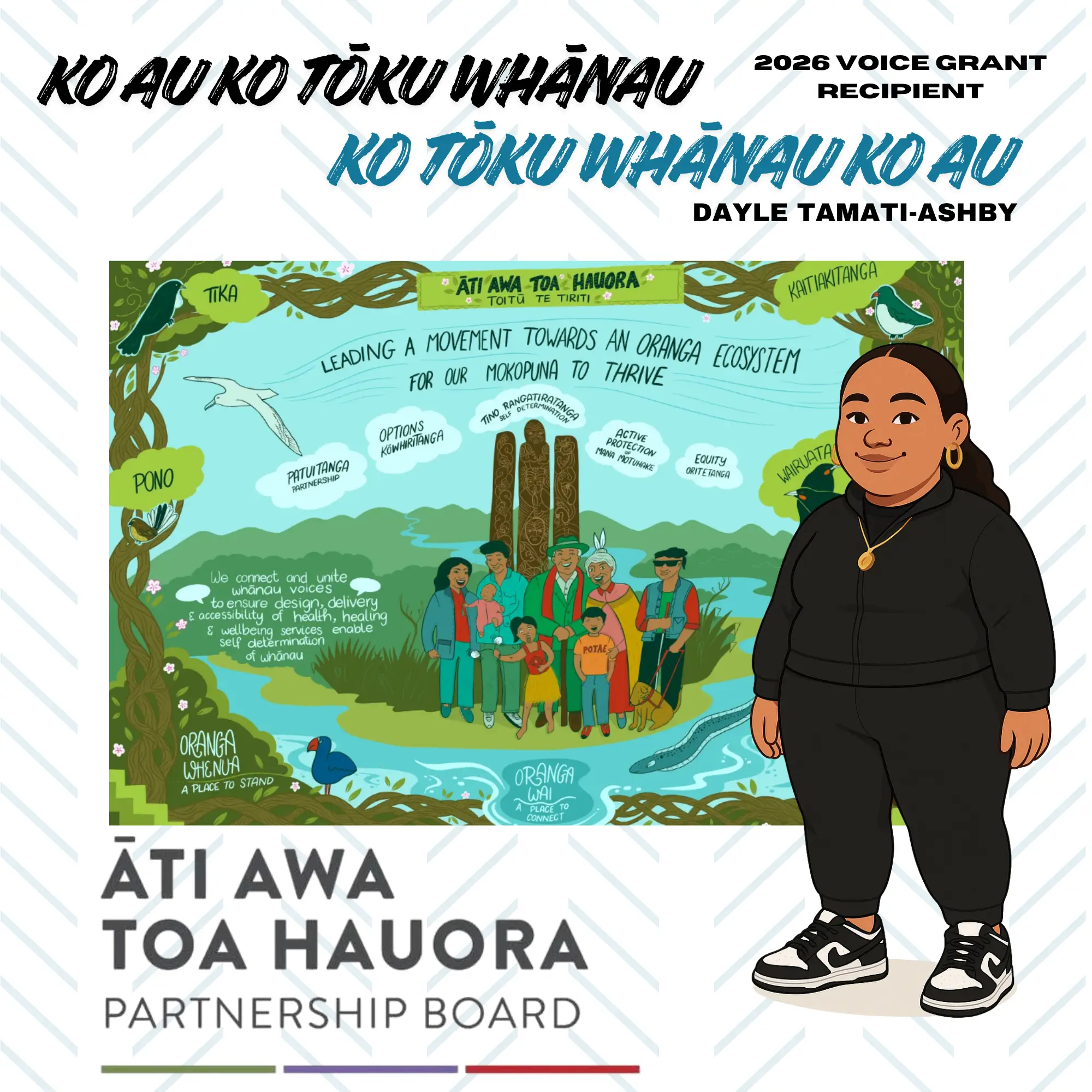
Ko Au Ko Tōku Whānau, Ko Tōku Whānau Ko Au
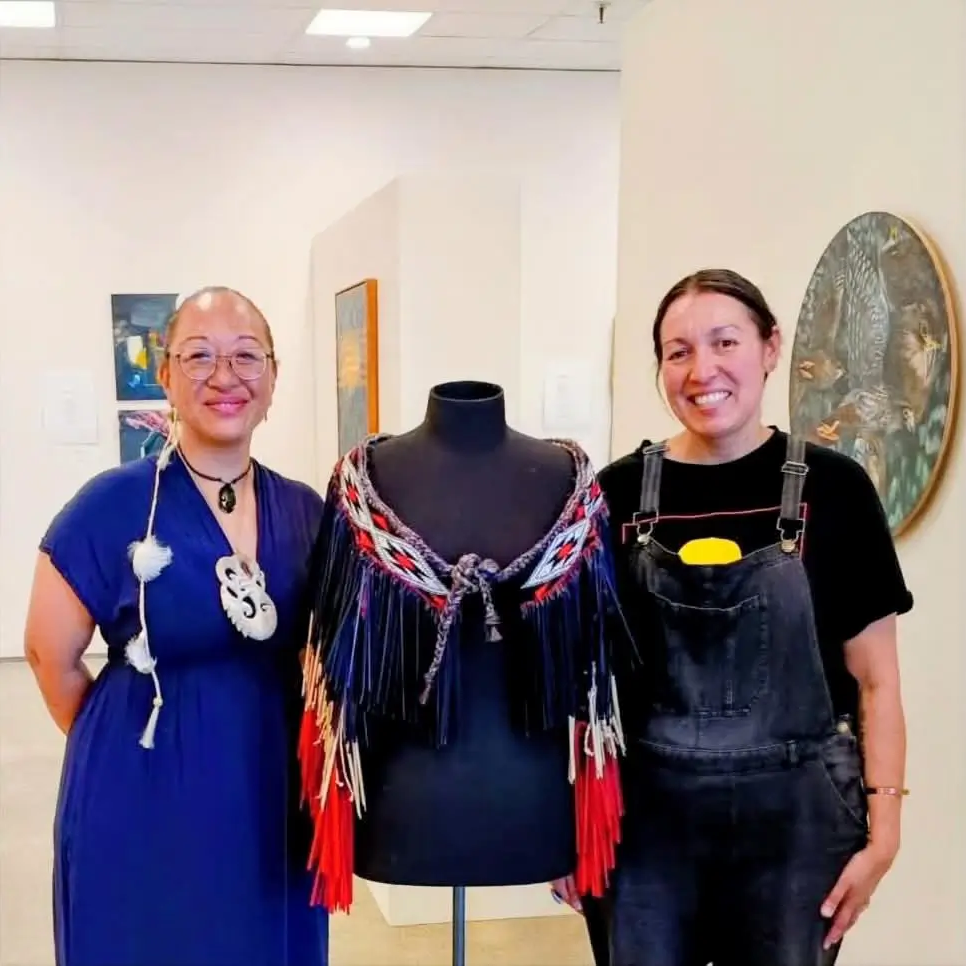
Matimati Makaurangi: Toi Rongoā – Art Healing Fingerprints
Delivered under the Kōkiri Marae Keriana Olsen Trust, this collaborative kaupapa supports the mahi of the Mana Wāhine Te Mauri cancer support group. Through raranga, toi kupu, contemporary movement, and rongoā Māori, it creates culturally safe healing spaces for whānau navigating cancer.
Operating across community locations in Te Awakairangi and Porirua, the kaupapa provides interactive wānanga that strengthen hauora, support healing journeys, and create opportunities for participants to share their experiences in ways that uphold mana. The insights gathered will help inform more culturally responsive cancer support services.
He Kai kei aku ringa
This kaupapa Māori programme delivers approximately nine wānanga over 12 weeks, engaging local Māori participants through māra kai and the moana as living classrooms.
Participants learn to grow, gather, prepare, and understand kai through tikanga-led gardening, sustainable kai moana practices, and nutrition wānanga. Grounded in mātauranga Māori and kaitiakitanga, the kaupapa strengthens relationships with healthy kai, builds practical skills to support obesity and diabetes prevention, and enhances hauora through whānau-centred learning.
Ko Au Ko Tōku Whānau, Ko Tōku Whānau Ko Au
This whānau-led cancer wellbeing project runs over approximately nine weeks and supports up to 12 whānau across rangatahi, pākeke, and kaumātua.
Through filmed one-on-one kōrero, mana-enhancing portrait photography, and whenua-based storytelling, the kaupapa centres whānau as knowledge holders and honours lived experiences of cancer across diagnosis, treatment, survivorship, caregiving, and loss.
The project concludes with a collective whānau gathering where stories and portraits are returned as taonga. Grounded in tikanga Māori, whakapapa, and rangatiratanga, the initiative supports healing, reduces whakamā around cancer kōrero, and provides authentic whānau-led insights to help shape more culturally responsive cancer support and future hauora planning.
Together, these three initiatives demonstrate the power of whānau voice in action, showing how community leadership, mātauranga Māori, and lived experience can help shape healthier futures for whānau across the rohe.
ENDS
For more information: https://atiawatoaimpb.nz