

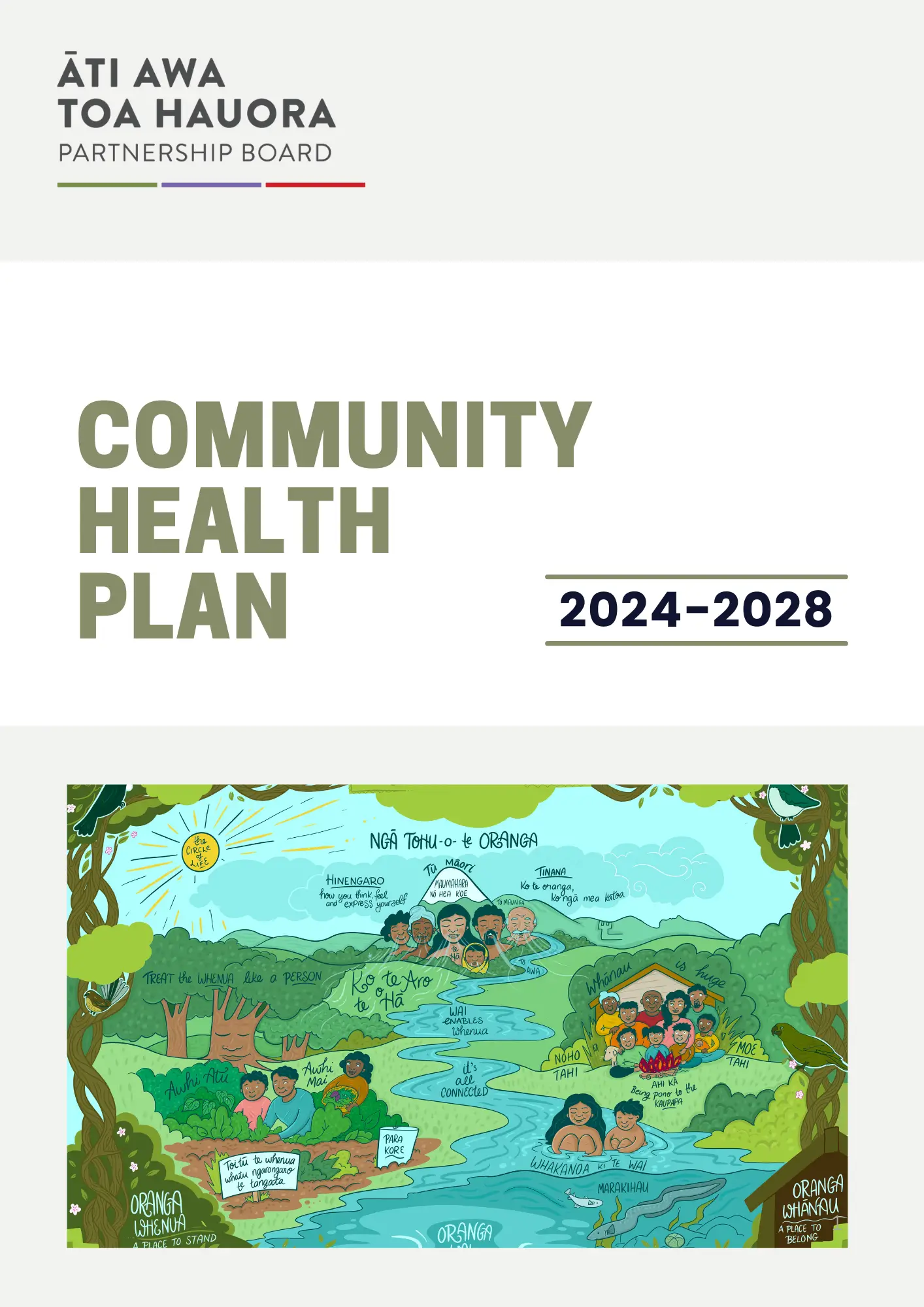
Community Health Plan
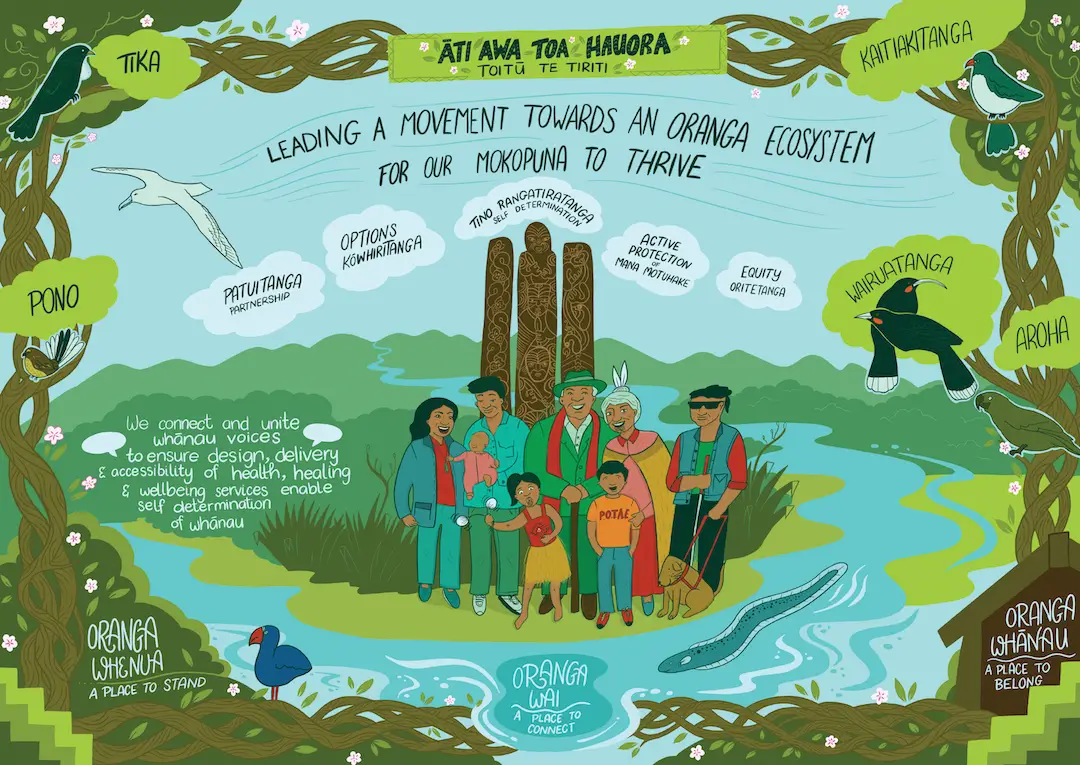
- Our Community Health Plan sets out our initial priorities and work programme to achieve our mission – an oranga ecosystem for our mokopuna to thrive.
- It draws on the stories of our people, their health experiences and their aspirations for oranga – good health in all its dimensions.
- As mana whenua we support the wellbeing of Māori and of all whānau who reside in our rohe.
- We bring local solutions, relationships and experience and look forward to working in partnership with health and other decision-makers to make this plan a reality.
- This plan is a living document – we will update it as we progress towards our long-term goals
Hikitia Ropata
Manahautū
Ripoata Taurua 2022 - 2024 - Ati Awa Toa Partnership Board Biennial Report
This Biennial Report covers Atiawa Toa Hauora lwi-Mãori Partnership Board’s (AATHB) journey from establishment in 2022 through to June 2024 – a period focused on laying strong foundations, building relationships, and navigating a health system that continues to shift and evolve. On behalf of our poari, we mihi to our iwi boards and leaders for their unwavering support, guidance and endorsement of our mahi.
Short course for hauora Māori providers on Hapai Te Reo Turi
Te Roopu Waiora are offering a short session from a turi community leader on Māori sign language.
Iwi Māori partnership boards prepare to bring the ‘fire’
Wednesday 26 March 2025, 04:53 PM – Alan Perrott, New Zealand Doctor Rata Aotearoa
The power of the whānau voice is yet to be understood, says Hikitia Ropata of Āti Awa Toa
Essentials
- Iwi Māori partnership boards are gathering insights – the “whānau voice” – to
collate community plans prioritising the health needs of their regions. - Different areas face distinct challenges, from cold, damp housing in the Hutt
Valley to water quality and pollution in Porirua. - While the boards have developed a strong community engagement programme
and data platform, their future is uncertain, with a government review
scheduled before their contracts end in June.
Iwi Māori partnership boards are yet to flex their muscles, says Hikitia Ropata, executive chair of Āti Awa Toa Hauora iwi Māori partnership board.
“Once we start getting our monitoring reports out…it’s going to be fire.”
Speaking this morning at the board’s first annual general meeting, Ms Ropata (Ngāti Toa Rangatira, Ngāti Raukawa, Te Āti Awa, Ngāti Porou) spoke of the power of the whānau voice – the aspirations and needs of the communities within their rohe – and what it is telling them.
“Wouldn’t it be fantastic if we could [use that information to] influence the KPIs of our partner providers and how they respond to our communities,” she says. The result could mean “getting more people into the community care system, rather than waiting in a queue at hospital”.
Each of the 15 boards is tasked with collecting this whānau voice feedback and using it to collate community plans to prioritise the health needs of each region.
No voice the same
Āti Awa Toa Hauora has found many voices with very different priorities. Those aged between 30 and 40 years, “our kōhanga kids”, says Ms Ropata, spoke of what the interconnected view of health and wellbeing meant to them.
Elderly kaumātua talked about the difficulty in getting a doctor’s appointment, joining up healthcare services in a single location and accessing support from marae. Ngarangi Williams (Ngāti Awa), who described herself as whānau of the IMPB and supportive of its kaupapa, spoke of her conversations with tamariki aged 12 years and under about their experience of healthcare: “The descriptive words they used were ‘not safe’.
“I thought that was quite confronting.”
Regional concerns
Regional differences have also become clear. While Māori living in Kāpiti talk of whānau issues, people in the Hutt Valley have highlighted cold, damp housing and the prevalence of respiratory issues.
Pollution and water quality are a concern around Porirua, says Ms Ropata, “and that is a public health issue and a wellbeing issue because our community can’t swim in Porirua Harbour…”
She also referenced the lingering impact of a two-year absence of fluoride in the town water supply: “The impact on babies was significant; the dental issues facing families with five-, six-, seven-year-olds are still significant.
“I guess that interconnection of whenua, wai and whānau – that is the angle we come from. We have to focus on social determinants, welfare and healing…”
Untapped resource
Board member Tane Cassidy (Ngāpuhi) says until now, governments have failed to tap into the whānau voice “because it is the Government that has been asking the questions.
“We have a better chance of fulfilling that obligation because we are closer to our
people, but if we can show a way of doing it well, others can pick up that
methodology.”
Their community engagement programme is being supplemented by a data platform developed with the Health Quality & Safety Commission, which collates regional data on social determinants of health, such as gambling, alcohol consumption, housing and fast-food availability.
What comes next remains a concern, as iwi Māori partnership boards will be reviewed next April, just before their contracts end in June.
Financials
Āti Awa Toa Hauora covers four whaitua: Kāpiti, Porirua, Pōneke and Te Awa Kairangi. The board’s audited financial statement shows it received $500,000 in its first year, followed by a top-up of $1.6 million last year, and retains unspent reserves of $1.82 million.
The top-up funding from Te Aka Whai Ora was to boost IMPB capability by helping meet each board’s establishment costs.
The approach taken by Āti Awa Toa Hauora to its establishment, growth, and spending meant many set up costs were not incurred last year, leaving the reserve taken into the current financial year.
After nine months, the executive chair says it is now in implementation mode and ready to make progress on the work programme set out in its community health plan. The board recently hosted a meeting of all PHOs within its rohe to discuss the potential impact of the Government’s soon-to-be-released “meso” organisations report. The meeting ended with a Ngāpuhi proverb: “He nui rawa ō mahi kia kore e mahi tonu.”
“We have come too far not to go further. We have done too much not to do more.”